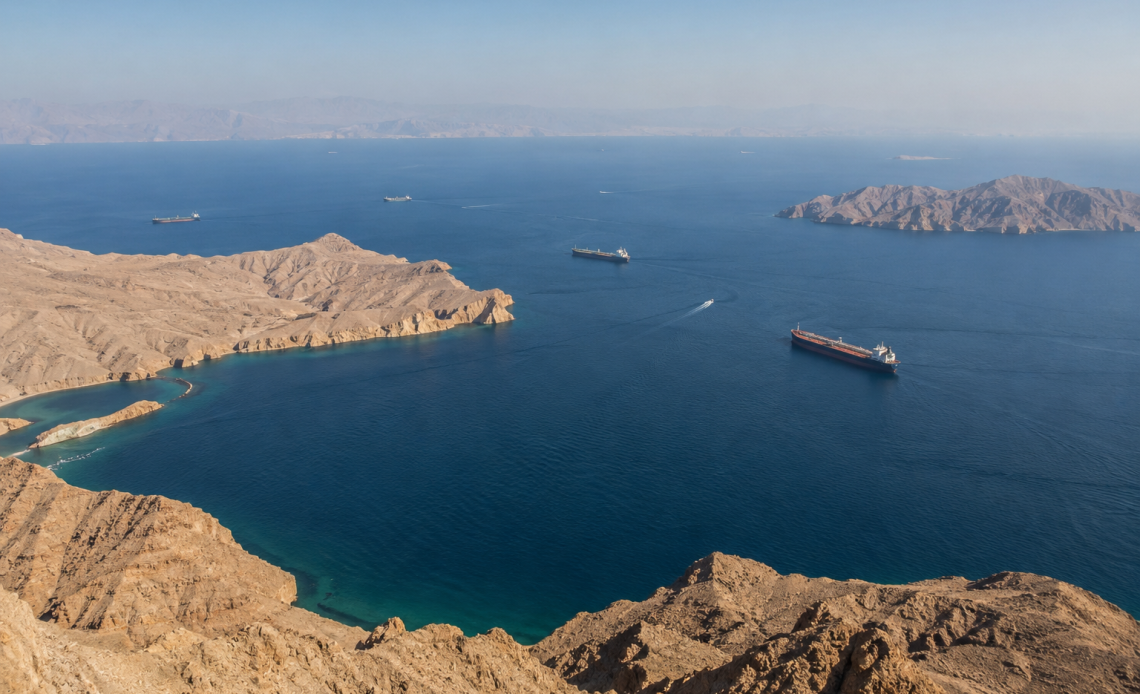
Wall Street traders are embracing a new market catchphrase as investors increasingly lose confidence that tensions in the Strait of Hormuz will ease in the near future.
The latest acronym making the rounds on trading desks is “NACHO” — short for “Not A Chance Hormuz Opens” — a term that reflects growing doubts that repeated statements by US President Donald Trump about reopening the critical shipping corridor will translate into a durable peace agreement.
The term comes as markets continue to wrestle with the economic fallout from the ongoing confrontation between the United States and Iran, which has disrupted one of the world’s most important oil transit routes and kept energy prices elevated despite intermittent ceasefire efforts.
The nickname was first highlighted by Bloomberg columnist Javier Blas, who said a trader introduced him to the phrase as investors adjusted to the possibility that the disruption could last far longer than initially expected.
“It’s essentially the market losing hope in the chance of a quick fix,” eToro market analyst Zavier Wong, told CNBC.
“For most of this crisis, every ceasefire headline triggered a sharp selloff in oil, and traders kept pricing in a resolution that never came. NACHO is an acknowledgment that higher oil isn’t a temporary shock to trade around, it’s the current market environment,” Wong said.
Escalating tensions deepen market anxiety
The latest escalation in the region has only reinforced that view.
As recently as Thursday, US and Iranian forces exchanged fire in the Strait of Hormuz, with each side accusing the other of provoking the incident.
The confrontation has further strained an already fragile ceasefire arrangement that had been repeatedly tested by accusations of violations from both countries.
Trump also intensified tensions earlier this week by warning that Iran would face bombing “at a much higher level” if it failed to agree to a peace deal, despite reports suggesting diplomatic negotiations between Washington and Tehran were progressing.
Investors reposition for prolonged disruption
The emergence of the NACHO trade signals a broader change in how investors are positioning themselves across financial markets.
Traders are increasingly treating the Hormuz disruption as a lasting macroeconomic challenge rather than a short-term geopolitical shock.
That shift is evident across oil markets, shipping costs, inflation hedges and bond trading.
Although Brent crude oil has retreated from the wartime high of $126 per barrel reached at the end of April, prices remain sharply elevated.
Brent was trading above $100 a barrel on Friday, still more than 38% higher than levels seen before the Middle East conflict escalated.
Shipping and insurance markets also continue to point to persistent stress despite periodic ceasefire headlines.
War-risk premiums for vessels traveling through the Strait of Hormuz climbed to around 2.5% of a ship’s hull value per voyage at their peak in March, up from roughly 0.1% before the conflict erupted.
While those insurance costs have moderated somewhat, they still remain around eight times above pre-war levels, according to eToro data.
“Insurers price risk for a living, and they’re obviously not treating this as a near-term resolution story,” Wong said.
From TACO to NACHO
Economist Paul Krugman said the new acronym better captures the current mood in markets than the earlier “TACO trade,” which had referred to the idea that “Trump Always Chickens Out” during periods of tariff or geopolitical brinkmanship.
I never bought into the TACO meme, which was initially about tariffs: Trump did not, in fact, reverse his destructive tariff policy, although he blinked in his confrontation with China. But NACHO looks right. Hormuz won’t open until the economic damage from its closure becomes much more severe.
Analysts at State Street Global Advisors said both the TACO and NACHO trades are now shaping market sentiment simultaneously.
“The TACO trade and NACHO trade are playing out simultaneously in the second quarter as high energy prices have not hindered a rebound in the S&P 500 to fresh all-time highs,” State Street analysts wrote in a recent note.
The firm added that investors still believe negotiations could eventually reopen the Strait, but markets are unlikely to aggressively price in Federal Reserve rate cuts without what it described as a “tangible peace deal.”
Oil, gold and inflation concerns dominate outlook
State Street also said the direction of oil prices could have major implications for other asset classes, particularly gold.
“If $100 per barrel is the new normal for crude oil prices over the next 1-3 months, the gold bullion complex may struggle to sustain upward momentum near $5,000 per ounce,” State Street said.
“On the other hand, if oil prices sustainably decline to $80 per barrel on the back of a peace deal and reopened Strait of Hormuz, gold could quickly cross $5,000 per ounce and eventually re-test $5,500 per ounce.”
While equities have remained relatively resilient, analysts said bond markets are increasingly reflecting fears that higher energy costs could persist and feed into inflation.
“Overall, market reactions to the energy shock have remained relatively orderly,” said Vasileios Gkionakis, senior economist and strategist at Aviva Investors in the CNBC report.
Still, Gkionakis noted that interest-rate markets are sending more concerning signals.
The clearest signal has come from rates markets where the front end has repriced sharply higher alongside a notable flattening of most yield curves.
A prolonged closure of the Strait of Hormuz would likely trigger “a more persistent inflation shock” while also increasing the probability of a global downturn, he added.
Trump’s credibility comes under scrutiny
The rise of the NACHO trade also reflects a broader reassessment of Trump’s credibility in financial markets.
University of Michigan economist Justin Wolfers told Barron’s:
Under no previous presidency did we have active markets betting on the president's resolve. There was no BACO trade, no CACO trade, nothing. It was always taken as a given that when the president spoke on Monday, he would likely still mean it on Tuesday. That's no longer true.
The post Forget TACO: Wall Street bets on ‘NACHO’ as Hormuz peace hopes vanish appeared first on Invezz